Changes in breast shape, size and firmness are common over time. Pregnancy, breastfeeding, weight fluctuations, ageing and natural changes in skin elasticity can cause the breasts to lose volume, sag or appear less full than before. For some women, these changes affect not only their appearance but also how comfortable and confident they feel in their bodies.
If you want fuller breasts but are also concerned about sagging, breast augmentation alone may not address all your concerns. In such cases, breast augmentation with a breast lift may be worth considering.
Breast augmentation adds volume using breast implants, while a breast lift, also known as mastopexy, reshapes the breasts and repositions the nipples and areolas when necessary. When performed together, these procedures can address both volume loss and breast sagging.
But how do you know whether you need both procedures or whether one would be sufficient?
Understanding the signs, surgical options and factors that influence your results can help you make a more informed decision.
What Is Breast Augmentation with a Breast Lift?
Breast augmentation with a breast lift is a combined surgical procedure designed to improve breast volume, shape and position.
Although both procedures involve breast surgery, they serve different purposes.
Breast augmentation increases breast volume and can improve upper breast fullness. It is commonly performed using silicone or saline implants, depending on availability, suitability and the surgeon’s recommendation.
A breast lift removes excess skin, reshapes the breast tissue and repositions the nipple and areola to create a firmer, more lifted appearance. A lift does not necessarily increase breast size.
When combined, the procedures can address two concerns at once: breasts that have lost fullness and breasts that sit lower on the chest than desired.
The appropriate approach depends on your existing breast volume, skin elasticity, degree of sagging, nipple position and desired outcome.
7 Signs You May Benefit from Breast Augmentation with a Breast Lift
Not everyone experiencing breast changes needs both procedures. However, certain signs may indicate that combining augmentation and a lift could be appropriate.
Your Breasts Have Lost Volume After Pregnancy or Breastfeeding
Pregnancy and breastfeeding can change breast size, skin elasticity and tissue distribution. After these changes, some women notice that their breasts appear smaller, less full or less firm than they did previously.
You may notice:
- Reduced fullness in the upper part of the breasts
- A softer or flatter breast shape
- Loose skin following a reduction in breast volume
- Nipples that sit lower than before
- A difference in breast shape compared with your pre-pregnancy appearance
Breast augmentation may help restore volume, but it does not necessarily correct significant sagging or excess skin.
If you have both volume loss and drooping, breast augmentation with a breast lift may provide a more comprehensive solution.
If you are planning another pregnancy, discuss the timing of surgery with your surgeon, as future pregnancy and breastfeeding may change your results.
Your Nipples Point Downward or Sit Below the Breast Fold
Nipple position is an important factor when determining whether you may benefit from a breast lift.
When the breasts lose firmness, the nipples may move downward relative to the breast mound. In some cases, the nipples may sit at or below the natural crease beneath the breasts.
This can be a sign of breast ptosis, the medical term for breast sagging.
Breast implants can increase breast volume, but they do not reliably reposition a low nipple or remove excess skin. In fact, adding volume without correcting significant sagging may leave the breasts looking fuller but still droopy.
A breast lift can reposition the nipples and reshape the breast tissue. When additional volume is also desired, combining the lift with augmentation may be appropriate.
Your surgeon will assess nipple position, skin quality and breast shape to determine which approach is likely to achieve a balanced result.
Your Breasts Look Deflated Despite Having Excess Skin
Some women have enough breast skin to accommodate a larger breast shape but do not have sufficient underlying volume to create the fullness they want.
This may happen after substantial weight loss, pregnancy or natural changes associated with ageing.
The breasts may appear elongated, flat at the top or less rounded than before. You may also notice that bras fit differently, even when your overall body weight has remained relatively stable.
In this situation, a breast lift can remove excess skin and reshape the breast, but it may not provide the additional volume you want.
Breast augmentation can restore fullness, while the lift addresses the excess skin and lower breast position.
The goal is to select an implant and lifting technique that complement your natural anatomy rather than simply choosing the largest possible implant.
Your Breasts Have Noticeable Sagging and You Want More Fullness
Breast sagging and volume loss can occur together, but they are not the same concern.
If your breasts sit lower on your chest and you also want a fuller appearance, augmentation alone may not provide the result you expect.
Similarly, a lift alone may improve breast position but leave you with less volume than you would prefer.
Combining both procedures allows the surgeon to address breast position and volume during the same treatment plan.
The extent of the lift and the size of the implant will depend on your anatomy, skin elasticity, breast tissue and aesthetic goals.
It is important to understand that the aim is to improve proportion and shape, not to guarantee a particular cup size or perfectly symmetrical breasts.
You Want to Improve Breast Asymmetry
Mild differences in breast size, shape and nipple position are common. However, some women have more noticeable asymmetry that affects how their breasts look in clothing or without support.
If one breast is smaller while the other sits lower, augmentation alone may not correct both concerns.
Depending on the difference between the breasts, your surgeon may recommend different implant sizes, a lift on one or both breasts, or a combination of techniques.
For example, one breast may need additional volume while the other may require more reshaping or nipple repositioning.
The surgical plan should be tailored to each breast rather than applying exactly the same correction on both sides.
Although surgery can improve symmetry, perfect symmetry cannot be guaranteed.
Your Breasts Have Changed After Significant Weight Loss
Significant weight loss can reduce the amount of fat within the breasts. When the skin does not contract sufficiently after this volume loss, the breasts may appear loose, elongated or deflated.
You may notice that your breasts have become smaller while excess skin remains, causing the nipples to sit lower or the breast shape to change.
A breast lift may address loose skin and sagging, while augmentation can add volume if you want a fuller result.
However, if you are still losing weight or expect substantial weight changes, it may be better to discuss the timing of surgery with your surgeon first.
Maintaining a relatively stable weight before surgery can help make treatment planning more predictable.
You Want a Fuller, More Lifted Breast Shape
Sometimes, the reason for considering combined surgery is not a single physical symptom but a combination of aesthetic concerns.
You may want more upper breast fullness, a rounder shape, improved nipple position and less sagging at the same time.
If your breasts have adequate skin elasticity and little sagging, augmentation alone may be sufficient. If sagging is more pronounced, a lift may be necessary to achieve your desired shape.
When both concerns are present, breast augmentation with a breast lift may be considered.
During consultation, explain what you would like to change and what you want to preserve. Your surgeon can then assess whether implants, a lift or both procedures are appropriate for your goals.
Breast Augmentation vs Breast Lift vs Combined Surgery
Understanding the differences between the three approaches can help you prepare for your consultation.
| Factor | Breast Augmentation | Breast Lift | Combined Procedure |
|---|---|---|---|
| Main purpose | Increase breast volume | Improve breast position and shape | Increase volume and correct sagging |
| Adds fullness | Yes, with implants | Not necessarily | Yes, with implants |
| Removes excess skin | Not usually | Yes, when required | Yes, when required |
| Repositions nipples | Not the primary purpose | Yes, when indicated | Yes, when indicated |
| May suit | Women seeking more volume with limited sagging | Women concerned about sagging who do not necessarily want larger breasts | Women with both volume loss and sagging |
The best option depends on your anatomy and expectations. A consultation helps determine whether one procedure can address your concerns or whether combining both would be more suitable.
How Is Breast Augmentation with a Breast Lift Performed?
The procedure is generally performed under general anaesthesia. The exact surgical steps depend on the implant selected, the degree of sagging and the amount of skin that needs to be removed.
The procedure may involve the following steps.
Preoperative assessment
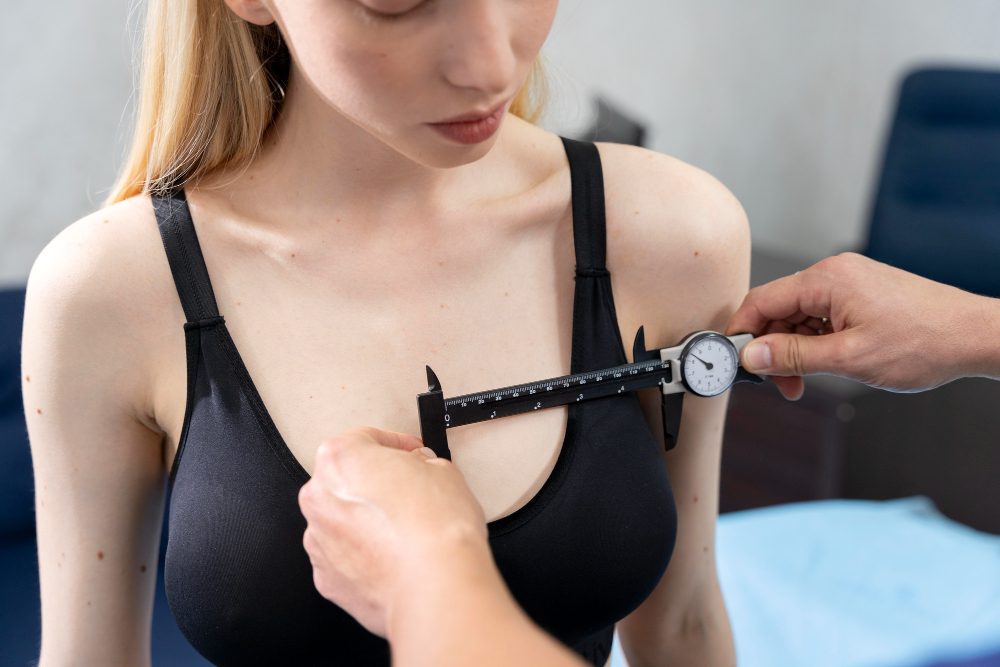
Your surgeon evaluates breast size, shape, nipple position, skin quality, existing breast tissue and overall health. Your desired outcome and relevant medical history are also discussed.
Implant selection
If implants are appropriate, their size, shape and placement are selected according to your anatomy and preferences. The implant should provide suitable volume without placing excessive tension on the breast tissues.
Breast reshaping and lifting
The surgeon removes excess skin as required, reshapes the breast tissue and repositions the nipple and areola when indicated.
Implant placement
The implant is placed in the planned position, depending on the surgical technique and your anatomy.
Closure and recovery
The incisions are closed, and you are monitored during the initial recovery period. You will receive instructions on wound care, medication, activity restrictions and follow-up appointments.
The procedure requires careful planning because augmentation adds volume while the lift reshapes the skin envelope. Balancing these two elements is important for achieving an appropriate breast shape.
What Are the Different Breast Lift Techniques?
The technique depends largely on the degree of sagging, nipple position and amount of excess skin.
Crescent Lift
A small incision is made along the upper edge of the areola. This approach may be suitable for selected patients with very mild sagging.
Periareolar or Donut Lift
An incision is made around the areola to allow limited skin removal and repositioning. It may be considered for selected patients with mild sagging.
Vertical or Lollipop Lift
Incisions are made around the areola and vertically down to the breast crease. This allows more extensive reshaping and is often considered when moderate sagging is present.
Inverted-T or Anchor Lift
Incisions are made around the areola, vertically down the breast and along the breast crease. This technique can allow more substantial skin removal and reshaping when significant sagging is present.
Not every technique is suitable for every patient, and combining an implant with a lift can affect the surgical plan. Your surgeon will recommend the approach based on your individual assessment.
Is It Better to Have Breast Augmentation and a Lift Together?
For suitable patients, combining the procedures can address volume loss and sagging in one planned operation.
Potential advantages include:
- Increasing breast volume while improving breast position
- Addressing two related concerns in one surgical plan
- Avoiding a separate operation when both procedures are appropriate together
- Creating a more proportionate breast shape
However, combined surgery is more complex than augmentation alone. The implant adds volume and stretches the breast tissues, while the lift removes skin and reshapes the breast. These competing demands require careful surgical planning.
In some cases, a surgeon may recommend a staged approach, performing the procedures separately to allow better control over healing and the final breast shape.
Your surgeon should explain the advantages and disadvantages of a combined versus staged approach in your particular case.
What Are the Risks of Combining Breast Augmentation with a Breast Lift?
Like any surgery, breast augmentation with a lift carries potential risks. These include risks associated with both implants and breast reshaping.
Possible complications include:
- Bleeding and infection
- Fluid accumulation
- Delayed wound healing
- Visible or unfavourable scarring
- Changes in nipple or breast sensation
- Breast asymmetry
- Changes in nipple or areola position
- Implant malposition
- Capsular contracture, in which scar tissue tightens around an implant
- Implant rupture or leakage, depending on the implant type
- Changes in breast shape over time
- Need for revision surgery
- Rarely, partial or complete loss of nipple or areola tissue
The combination of augmentation and lifting requires particular attention to blood supply, skin tension and tissue healing.
Your individual risk depends on your health, smoking status, breast anatomy, surgical technique and other factors. Implants are not lifetime devices, and additional surgery may be needed in the future.
A detailed consultation should cover the benefits, limitations, alternatives and potential complications before you decide to proceed.
What Is Recovery Like After Breast Augmentation with a Breast Lift?
Recovery varies according to the extent of surgery, the implant placement, your general health and how your body heals.
During the initial recovery period, you may experience swelling, bruising, tightness and discomfort. Your breasts may sit higher or appear firmer initially, with their shape gradually changing as swelling settles.
Your surgeon may recommend a supportive surgical bra and specific instructions for caring for your incisions.
You should also expect temporary restrictions on heavy lifting, strenuous exercise and certain upper-body movements.
Follow-up appointments are important to assess wound healing, breast position and any concerns that arise during recovery.
If you are travelling to Mumbai for surgery, arrange sufficient time for postoperative assessment before returning home. Do not book travel based only on a fixed number of recovery days. Your operating surgeon should advise you when travel is appropriate and explain how follow-up will be managed after you return.
Who Is a Suitable Candidate for Breast Augmentation with a Breast Lift?
You may be a candidate if you:
- Have lost breast volume and have noticeable sagging
- Want fuller breasts with improved positioning
- Have excess skin following pregnancy or weight loss
- Have nipples that sit low on the breast mound
- Have realistic expectations about surgical results
- Are in suitable general health for surgery
- Understand the risks, scars and long-term considerations associated with implants
It may be appropriate to postpone surgery if you are pregnant, breastfeeding, planning significant weight loss or experiencing a medical issue that needs attention first.
Your surgeon may also discuss smoking cessation and other steps that can support healing.
Only a clinical assessment can determine whether combining the procedures is appropriate for you.
Considering Breast Lift with Implants in Mumbai?
If you are considering breast lift with implants in Mumbai, choosing the right plastic surgeon is an important part of the decision.
Look for a surgeon with recognised specialist plastic surgery qualifications, relevant experience in combined breast procedures, a suitable surgical facility and a clear approach to postoperative care.
During your consultation, ask about the recommended implant, expected scars, surgical technique, recovery timeline, possible complications and the likelihood of future implant-related surgery.
Dr. Sudhanva H. Kumar offers consultations for patients considering breast procedures, including breast augmentation and breast lift surgery. An individual assessment can help establish whether augmentation, a lift or a combination of both is appropriate for your anatomy and goals.
The objective should be to develop a treatment plan that balances breast volume, position and shape while prioritising safety and realistic expectations.
Frequently Asked Questions
Q. What is breast augmentation with a breast lift?
Breast augmentation with a breast lift combines implants to increase breast volume with surgery to remove excess skin, reshape the breasts and reposition the nipples when necessary. It may be suitable for women who want fuller breasts and have noticeable sagging.
Q. How do I know if I need a breast lift with implants?
You may benefit from both procedures if your breasts have lost volume and sag, or if your nipples sit low and you also want a fuller breast shape. A surgeon can assess whether augmentation alone, a lift alone or combined surgery is appropriate.
Q. Can breast implants correct sagging without a lift?
Implants may improve fullness and provide some shape improvement in selected patients, but they do not reliably correct significant sagging or reposition low nipples. Adding an implant that is too large may place additional strain on the tissues.
Q. Can I have breast augmentation and a lift in one operation?
Yes, suitable patients can undergo both procedures during one operation. However, combined surgery is more complex, and some patients may benefit from staged procedures depending on their anatomy and surgical risks.
Q. Will breast augmentation with a lift leave scars?
Yes. The scars depend on the lifting technique and the amount of skin removed. They may be around the areola, extend vertically down the breast or include a horizontal scar along the breast crease. Scars generally mature over time but do not disappear completely.
Q. How long do the results of breast augmentation with a lift last?
Results can last for many years, but they are not permanent. Ageing, pregnancy, weight fluctuations, changes in skin elasticity and implant-related factors can affect breast shape over time.
Q. Can I breastfeed after breast augmentation with a breast lift?
Breastfeeding may remain possible, but breast surgery can affect milk production, nipple sensation or the ability to breastfeed. The effect depends on the surgical technique and individual anatomy. Discuss future pregnancy and breastfeeding plans with your surgeon before surgery.
Q. Is combined breast surgery more complex than breast augmentation alone?
Yes. The surgeon must balance implant volume with skin removal, tissue reshaping and nipple positioning. Careful planning is necessary to manage wound healing, blood supply and the tension placed on breast tissues.
Q. Is breast lift with implants in Mumbai suitable for international patients?
It may be an option for international patients who have access to a qualified plastic surgeon and can arrange appropriate travel, recovery and follow-up. Patients should plan sufficient time for postoperative assessment and have a clear plan for care after returning home.
Q. How do I choose the right implant size for a combined breast procedure?
Implant selection depends on your breast dimensions, existing tissue, skin quality, body proportions and desired outcome. Your surgeon should recommend an implant that suits your anatomy rather than selecting a size based only on cup size or photographs.