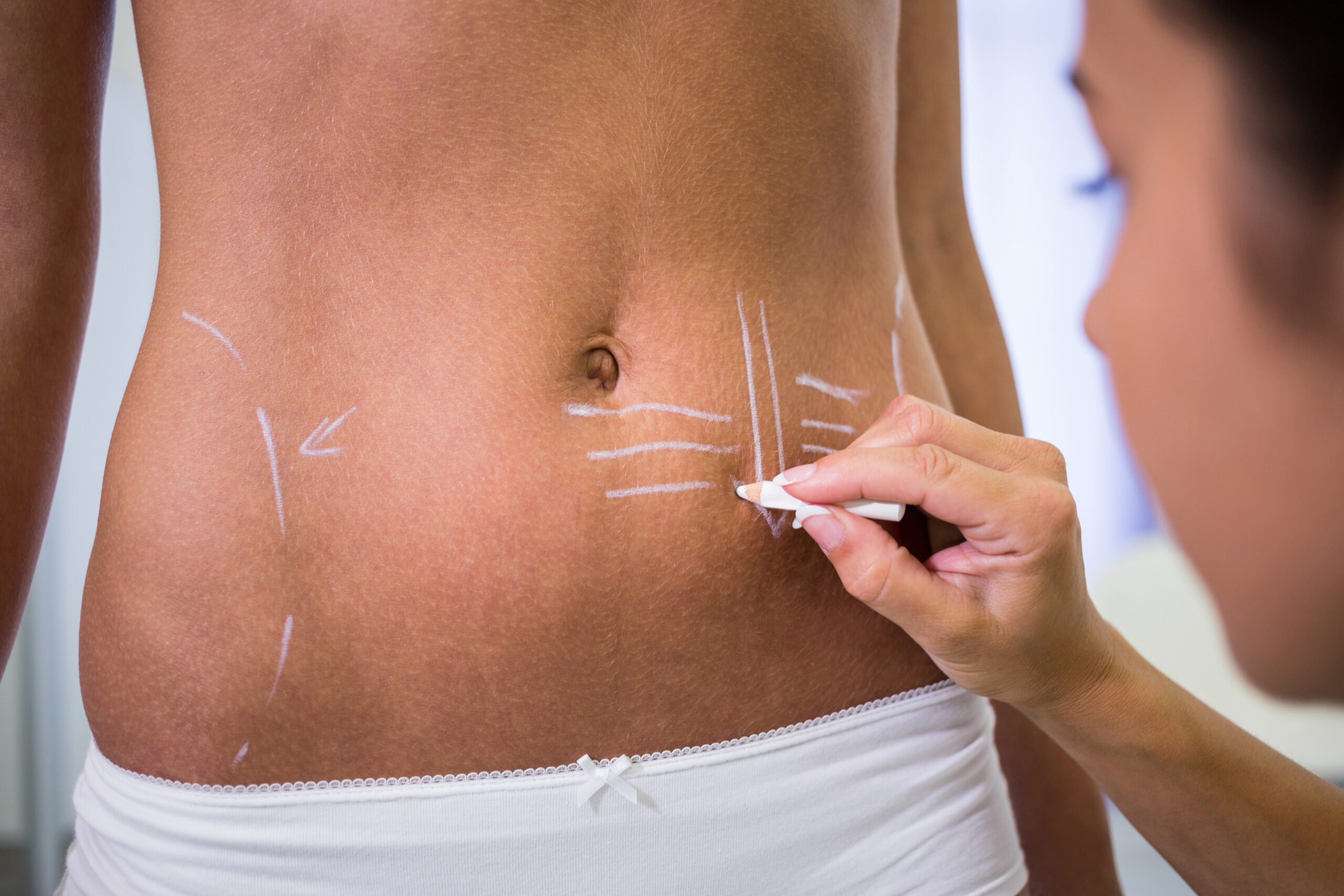
If you’re considering liposuction, you may have spent time thinking about the results you want—but there may be another question quietly sitting in the back of your mind:
“What about the scars?”
It’s a very understandable concern. You may be comfortable with the idea of removing stubborn pockets of fat, but you don’t want to trade one concern for another that could remain visible.
The good news is that liposuction is performed through small incisions, and the resulting scars are usually much smaller than the scars associated with larger surgical procedures. With time, they often become less noticeable.
However, no surgeon can promise that scars will disappear completely. How they heal depends on your skin, genetics, the location of the incisions, the technique used, and how you care for them during recovery.
Here’s what you should know about liposuction scars before making your decision.
The Short Answer
Yes, liposuction can leave scars because the procedure requires small openings in the skin for the liposuction cannula.
The liposuction incisions are generally small, and surgeons often place them in areas where the resulting marks can be less noticeable. As they heal, scars typically change in colour and texture and may become considerably less visible.
But everyone’s skin heals differently.
Some people develop very subtle marks, while others may be more prone to darker, raised, or more noticeable scars.
The goal isn’t necessarily to make the scars disappear completely. It’s to keep the incisions as small and discreet as reasonably possible and allow them to heal properly.
Does Liposuction Leave Scars?
Yes, but the scars are usually small.
During liposuction, a thin cannula is inserted through small openings in the skin to remove unwanted fat. These openings need to heal after the procedure, which means some degree of scarring is possible.
The size and appearance of the scars can vary depending on:
- The area being treated
- The size of the cannula used
- The surgical technique
- Your skin type
- Your individual healing response
- Your tendency to develop prominent scars
- How the incisions are cared for during recovery
It’s also important to remember that a scar can look very different during the first few weeks compared with several months later.
Early redness, swelling, or darker pigmentation doesn’t necessarily represent how the final scar will look.
How Big Are Liposuction Incisions?
Liposuction incisions are generally small because the cannula used to remove fat is relatively narrow.
The exact size depends on the technique, the cannula, and the area being treated.
Your surgeon may make several small incisions rather than one larger opening. This allows the cannula to access different areas while helping the surgeon create an even contour.
The incisions are also usually positioned strategically where possible.
For example, they may be placed in natural creases or less conspicuous areas so that any resulting marks are less noticeable once healed.
Where Are Liposuction Incisions Made?
There isn’t one standard location for every liposuction procedure.
The position of the incisions depends on the area being treated and the surgical approach.
Incisions may be placed in discreet locations around areas such as:
Your surgeon will plan the incision sites based on the areas requiring treatment and how the cannula needs to be positioned.
During your consultation, it’s reasonable to ask where the incisions will be made and where you can expect the scars to appear.
What Do Liposuction Scars Look Like After Healing?
Fresh surgical incisions don’t usually look like their final scars.
Initially, a scar may appear:
- Pink or red
- Darker than the surrounding skin
- Slightly raised
- Tender or sensitive
- More noticeable than you expected
Over time, scars generally mature and become softer and less prominent.
The process can take several months, and scar maturation may continue for longer.
So if you’re looking at your incisions a few weeks after surgery and thinking, “Is this what the scar will always look like?”, try not to judge the final result too early.
Your skin needs time.
What Determines How Visible Liposuction Scars Become?
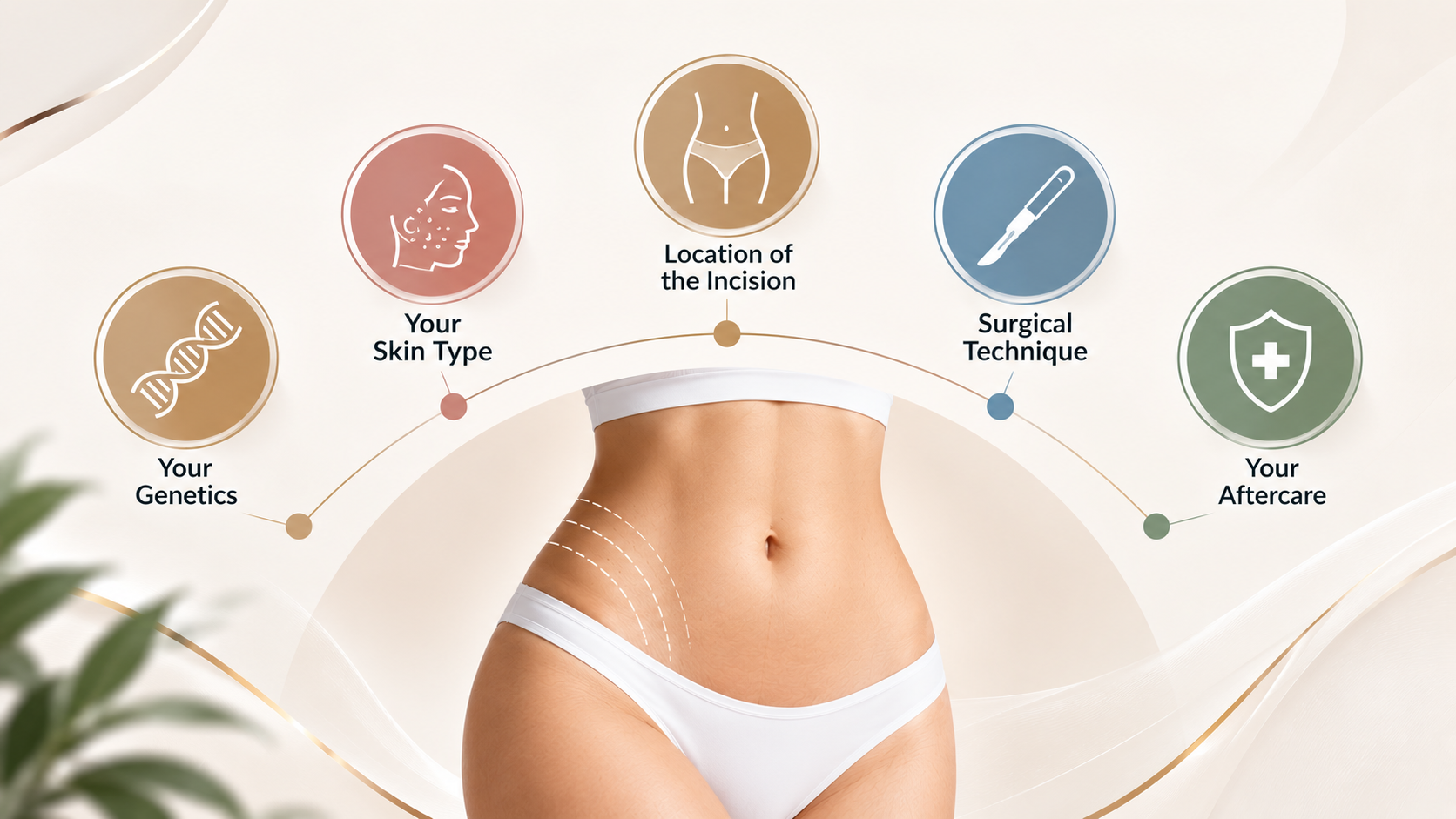
There’s no way to predict exactly how an individual scar will look.
Several factors can influence the final appearance.
Your Genetics: Some people naturally develop very fine scars, while others are more likely to develop thicker or darker scars.
Your previous scars can sometimes give your surgeon an idea of how your skin tends to heal.
Your Skin Type: Skin pigmentation and individual skin characteristics can affect how noticeable a scar becomes.
Some people may experience darker pigmentation around a healing incision, particularly after inflammation.
The Location of the Incision: A scar in a natural crease or an area normally covered by clothing may be less noticeable than one in a highly visible location.
Surgical Technique: Careful placement and handling of the incisions can influence how they heal.
This is one reason choosing an experienced, qualified plastic surgeon matters.
Your Aftercare: How you care for your incisions during recovery can also affect healing.
Following your surgeon’s instructions and protecting healing skin can help support a better scar outcome.
How Long Do Liposuction Scars Take to Heal?
There are really two different processes to think about:
Initial wound healing and scar maturation.
The small incisions may close relatively quickly, but the scar itself can continue changing for months.
During this period, you may notice changes in:
- Colour
- Thickness
- Texture
- Sensitivity
- Firmness
A scar that initially looks darker or more noticeable may gradually become lighter and flatter.
That doesn’t mean every scar will eventually become invisible. It simply means that scar appearance can continue to change long after the skin has initially healed.
Can Liposuction Scars Be Completely Removed?
Usually, it isn’t realistic to promise complete scar removal.
Any time the skin is cut or injured, the body repairs it by forming scar tissue.
The aim of good scar care and appropriate treatment is generally to reduce the appearance of a scar, not guarantee that it will disappear completely.
How noticeable it remains depends largely on your individual healing response.
This is an important point to discuss during your consultation if scars are a major concern for you.
Liposuction Scar Treatment: What Can Help?
If a scar remains noticeable after it has had time to heal and mature, there are treatments that may help improve its appearance.
Depending on the type and characteristics of the scar, a plastic surgeon or dermatologist may consider options such as:
- Silicone-based scar products
- Laser treatments
- Microneedling
- Steroid treatment for selected raised scars
- Other scar-management procedures
Not every treatment is appropriate for every scar.
For example, a treatment that may help a raised scar isn’t necessarily the right approach for pigmentation or a flat, mature scar.
That’s why Liposuction Scar Treatment should be selected based on the individual scar rather than simply choosing the most popular treatment advertised online.
And importantly, don’t start applying products to fresh incisions unless your surgeon has specifically advised you to do so.
Can You Reduce the Chance of Noticeable Scars?
You can’t completely control how your skin scars, but there are things you can do to support healthy healing.
Follow Your Surgeon’s Wound-Care Instructions
Keep the incisions clean and follow the instructions you’ve been given about dressings, bathing, medications, and activity.
Don’t Pick or Scratch Healing Incisions
Even if the skin feels itchy as it heals, avoid picking at scabs or disturbing the incision.
Protect Healing Scars From the Sun
Once your surgeon says it is appropriate, protect healing scars from excessive sun exposure.
UV exposure can make some scars more noticeable or darker.
Give Your Skin Time
This one can be difficult.
You may want to see your final result quickly, but scars don’t mature overnight.
Be patient with the healing process.
Does Compression Garment Use Affect Liposuction Scars?
Compression garments are commonly recommended after liposuction, depending on the procedure and your surgeon’s protocol.
Their primary purpose isn’t specifically to remove scars. They may provide support and help manage postoperative swelling in the treated areas.
Whether you need one, how long you should wear it, and when it can be removed should be determined by your surgeon.
Compression garments shouldn’t be considered a substitute for proper incision care.
Can Liposuction Scars Become Worse With Exercise?
Once you’ve been cleared to exercise, normal physical activity shouldn’t automatically make your scars worse.
However, during early recovery, strenuous activity may place unnecessary stress on healing tissues.
That’s why returning to exercise should be gradual.
If you notice that an incision becomes increasingly painful, opens, bleeds, or develops other concerning changes after activity, stop and contact your surgical team.
Your recovery instructions should always take priority over a general exercise timeline.
What If My Scar Becomes Raised or Dark?
Not every scar heals as a thin, pale line.
Some people can develop scars that are:
- Raised
- Firm
- Darker than the surrounding skin
- Itchy
- More noticeable than expected
Some raised scars may represent hypertrophic scarring or, less commonly, a keloid tendency.
If you’re concerned about how a scar is developing, it’s better to have it assessed rather than trying multiple scar treatments on your own.
Early evaluation may provide more options for managing a problematic scar.
When Should You Contact Your Surgeon?
Not every change in an incision means something is wrong, but certain symptoms deserve attention.
Contact your surgical team if you notice:
- Increasing redness around an incision
- Worsening pain
- Pus or unusual drainage
- Persistent bleeding
- The incision opening
- Significant swelling
- Fever
- A sudden change that concerns you
Your surgeon can determine whether what you’re seeing is part of normal healing or needs treatment.
Are Liposuction Scars More Noticeable on Certain Areas?
Potentially, but there isn’t one area where scars will always be more visible.
Visibility depends on the incision location, your clothing choices, skin characteristics, pigmentation, and individual healing.
For example, when treating the arms, your surgeon may need to consider incision placement carefully because the area can be more exposed.
Similarly, when treating the abdomen or waist, incisions may be positioned in less conspicuous areas where possible.
The important thing is to discuss where the incisions will be placed before surgery, especially if scar visibility is one of your concerns.
Should Scars Affect Your Decision to Have Liposuction?
It’s worth considering, but scars shouldn’t be looked at in isolation.
Liposuction involves small incisions, and those incisions can leave marks. At the same time, the purpose of the procedure is to improve the contour of specific areas by removing localised fat.
The right decision depends on weighing the potential benefits, limitations, risks, recovery and your personal priorities.
If you’re considering liposuction, don’t hesitate to tell your surgeon that scars are important to you.
It’s a perfectly reasonable part of the conversation.
The Bottom Line
Liposuction can leave small scars, but they are generally much smaller than the scars associated with larger surgical procedures.
The final appearance of a scar depends on several factors, including the incision location, surgical technique, your skin and genetics, and how your body heals.
Most scars change considerably as they mature, often becoming softer and less noticeable over time.
If a scar remains prominent, different Liposuction Treatment options may help improve its appearance, depending on the type of scar.
The most important thing is to have realistic expectations.
A skilled surgeon can minimise the size and visibility of the Liposuction Incisions, but no responsible surgeon can promise that every scar will disappear completely.
If you’re considering liposuction and scars are one of the things making you hesitate, bring that concern into your consultation. Knowing where the incisions will be placed, how they are expected to heal, and what can be done if a scar becomes noticeable can make the decision feel much less uncertain.

Frequently Asked Questions
Does liposuction leave permanent scars?
Liposuction can leave permanent scars because the skin needs to heal after the small incisions used during the procedure. However, the scars often become less noticeable as they mature.
How noticeable are liposuction scars?
Liposuction scars are usually small, but their visibility varies from person to person. Factors such as skin type, genetics, incision location and healing can affect how noticeable they become.
How big are liposuction scars?
The scars are generally small because liposuction is performed through relatively small incisions. Their exact size depends on the technique, cannula and treatment area.
Do liposuction scars fade?
Scars often change and become less noticeable as they mature. They may gradually become lighter, flatter and softer, although they may not disappear completely.
Can liposuction scars be removed completely?
Complete scar removal cannot usually be guaranteed. Treatments can sometimes improve the appearance of a scar, but the goal is generally to make it less noticeable rather than erase it completely.
What is the best treatment for liposuction scars?
There isn’t one treatment that is best for every scar. Depending on whether the scar is raised, pigmented, thick, or otherwise noticeable, options may include silicone products, laser treatment, microneedling or other treatments recommended by a qualified professional.
When can I start treating liposuction scars?
Don’t apply scar treatments to fresh incisions unless your surgeon has advised you to do so. Your surgeon can tell you when the wounds have healed sufficiently and which scar-care approach is appropriate.
Can liposuction scars become darker?
Yes. Some scars can become darker than the surrounding skin during or after healing, particularly in people who are prone to pigmentation changes. Sun exposure can also make some scars more noticeable.
Can liposuction scars become raised?
Some people develop raised or thicker scars after surgery. If a scar becomes increasingly raised, firm, itchy or uncomfortable, have it assessed by your surgeon or another qualified medical professional.
How long do liposuction scars take to fully mature?
Scar maturation can continue for several months and sometimes longer. The initial wound may heal relatively quickly, but the colour, texture and thickness of the scar can continue changing over time.
Can scar creams remove liposuction scars?
Scar products may help improve the appearance of some scars, but they cannot guarantee complete removal. Your surgeon can recommend an appropriate product based on how your incision is healing.
Does the surgeon’s technique affect liposuction scars?
Surgical technique and incision placement can influence the size and visibility of scars. However, individual healing and genetics also play an important role, so even well-placed incisions can heal differently from person to person.
Medical Disclaimer: This article is intended for general educational purposes and does not replace an individual consultation with a qualified plastic surgeon. Your surgeon can assess your skin, explain the expected incision locations and provide personalised advice about scar care and treatment.